 Schedule Appointment
Schedule Appointment
Schedule Appointment
Schedule Appointment
Schedule Appointment
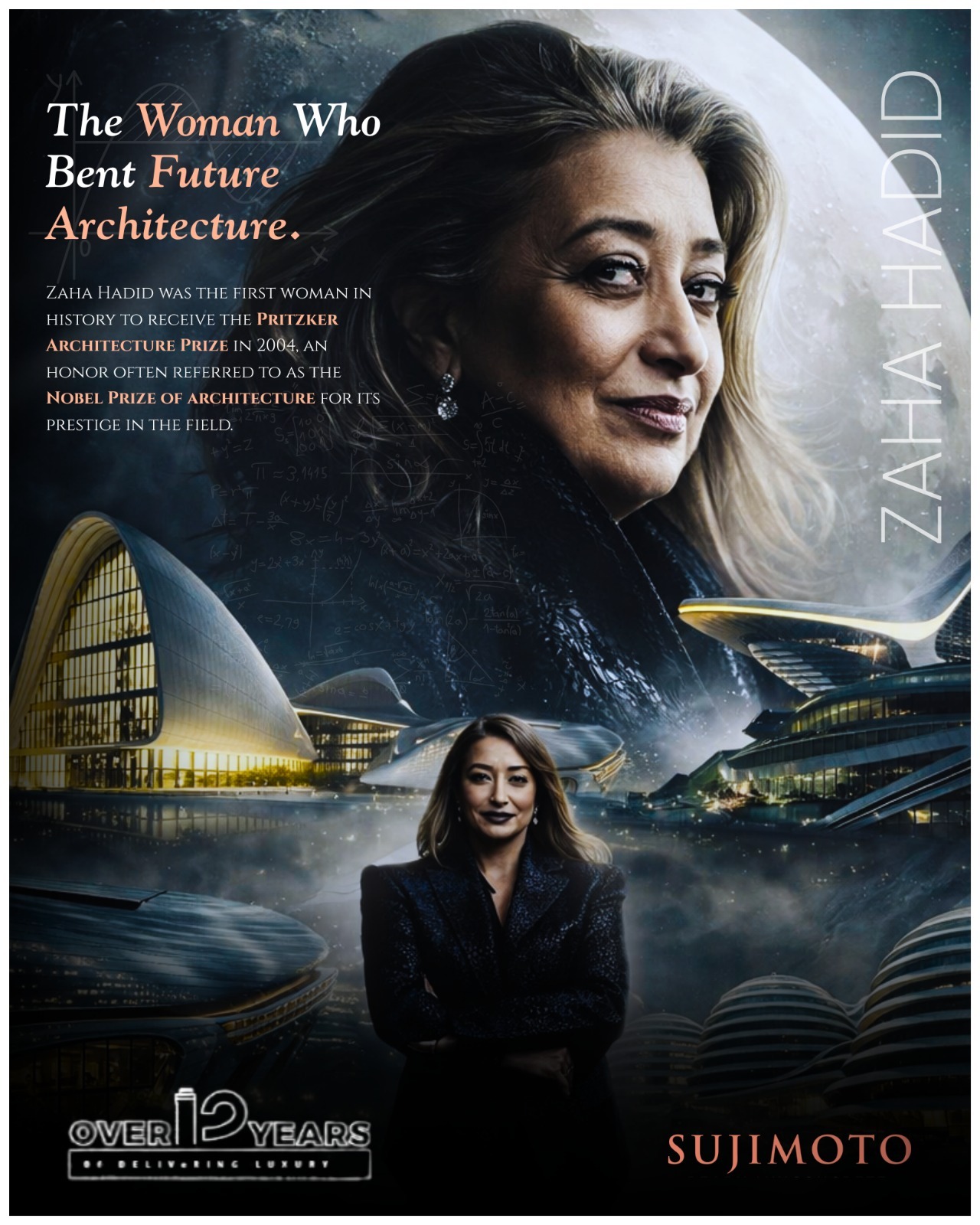
In March 2004, Zaha Hadid stood alone at the edge of a profession that had told her, again and again, that her ideas were too fluid, too impossible, too audacious for modern civilization. Her visions spilled beyond the page, bending walls, defying gravity, and demanding that space itself learn a new language of architecture.
Innovation rarely announces itself with spectacle. More often, it arrives quietly, through a single decision that defies convention and prizes meaning over applause. LucreziaBySujimoto belongs to this rarer category. Its significance is not measured in height, price, or headlines, but in a bold architectural choice that places it firmly within a global lineage of serious, visionary design.

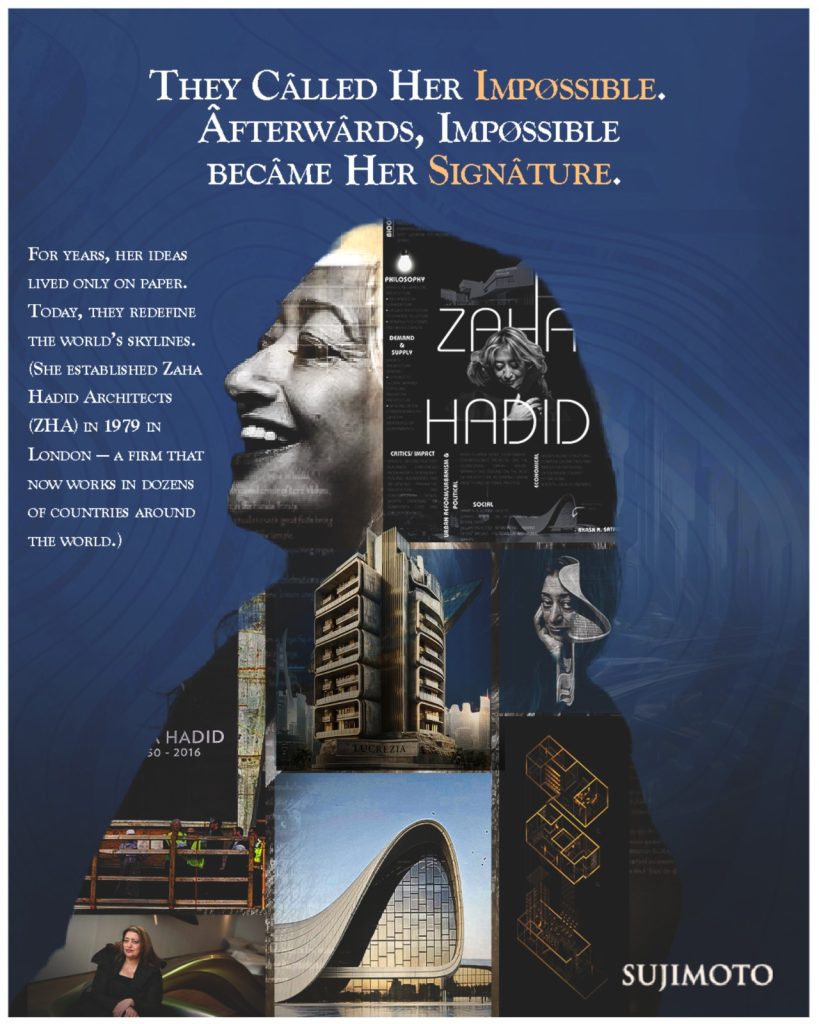
Zaha Hadid understood something fundamental that most architects resisted for decades: the straight line is not a law of nature. It is a habit. Her work dismantled that habit. Concrete bent. Steel flowed. Space became kinetic. When she became the first woman to receive the Pritzker Architecture Prize in 2004, the award marked more than personal triumph; it formalized a revolution. Architecture was no longer confined to stillness. It could move, provoke, and feel alive.
To speak of Zaha Hadid today is to speak of influence rather than authorship. Her legacy lives not only in museums and opera houses, but in the design language she released into the world. Lucrezia by Sujimoto belongs to this lineage of influence, unmistakably Hadidian in philosophy: fluid, expressive, unapologetically future-facing.
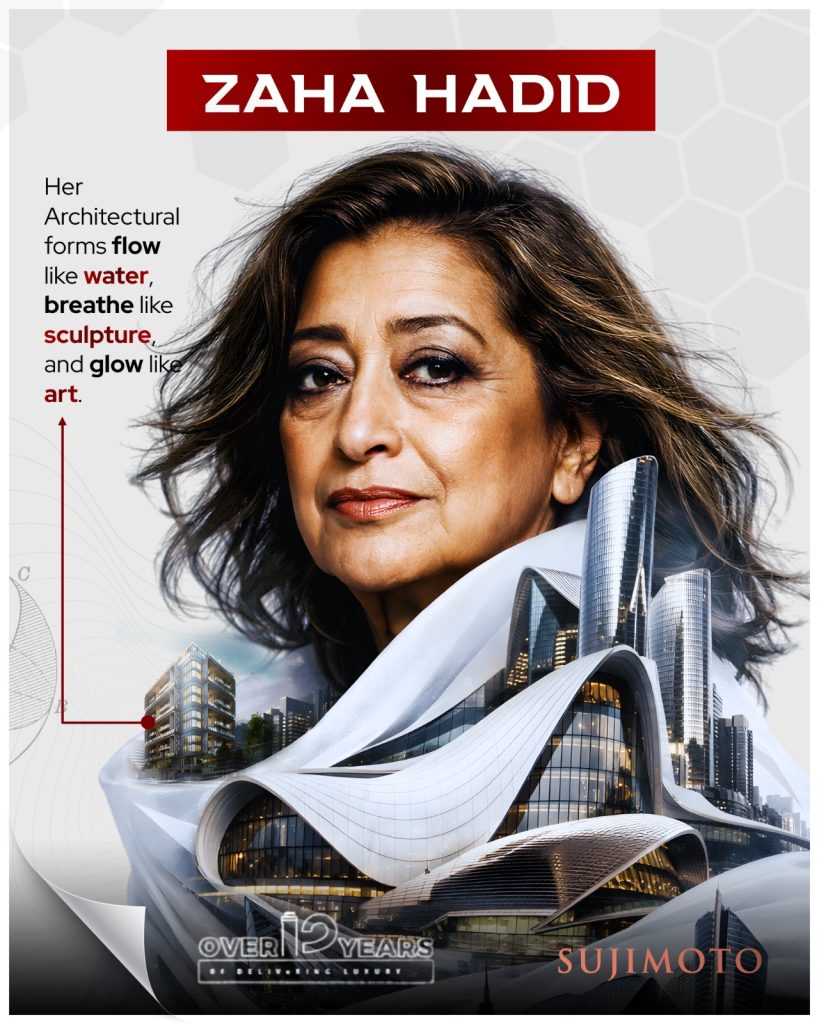
Rising 15 storeys above Banana Island, Lucrezia asserts itself with restraint rather than spectacle. Its glass-reinforced concrete façade—among the first of its kind in African residential architecture—does not seek attention through ornament. Instead, it manipulates light and shadow with sculptural intent. The building appears to shift as the day progresses, revealing new silhouettes at each hour.
Only 22 luxurious maisonettes and two of Africa’s best penthouses are conceived within Lucrezia as vertical estates rather than apartments. Double-height living spaces introduce scale without excess. Private elevators, suspended infinity pools, test the boundaries of engineering while maintaining a sense of effortlessness, a private IMAX cinema, a wellness spa, and immersive leisure facilities.

Lucrezia fuses luxury, wellness, and cutting-edge technology. Residents enjoy private IMAX cinemas, virtual golf, an indoor pool, Technogym fitness, and a wellness spa. Every home is fully automated with Crestron — the Rolls-Royce of automation — allowing effortless control of lighting, climate, and entertainment. EV charging, concierge service, and private access complete a living experience that is intelligent, immersive, and utterly seamless.
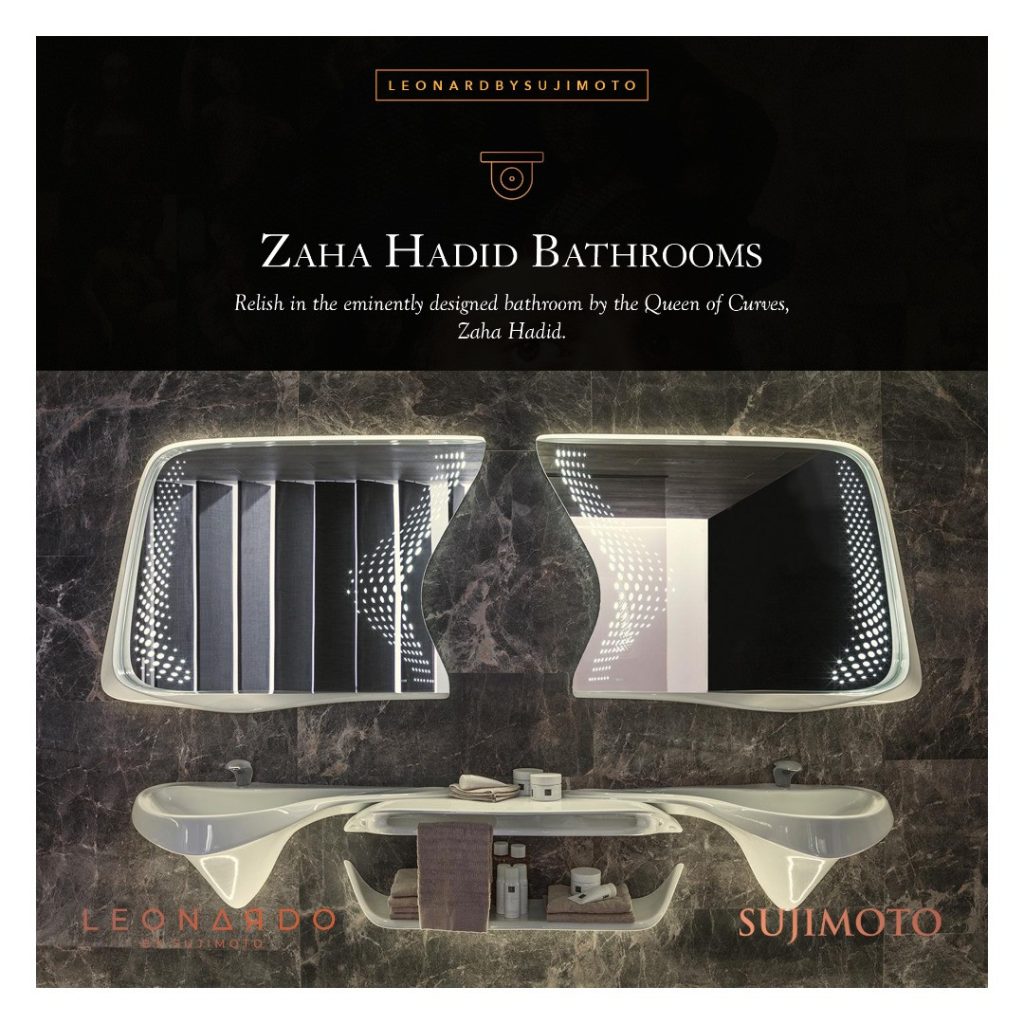
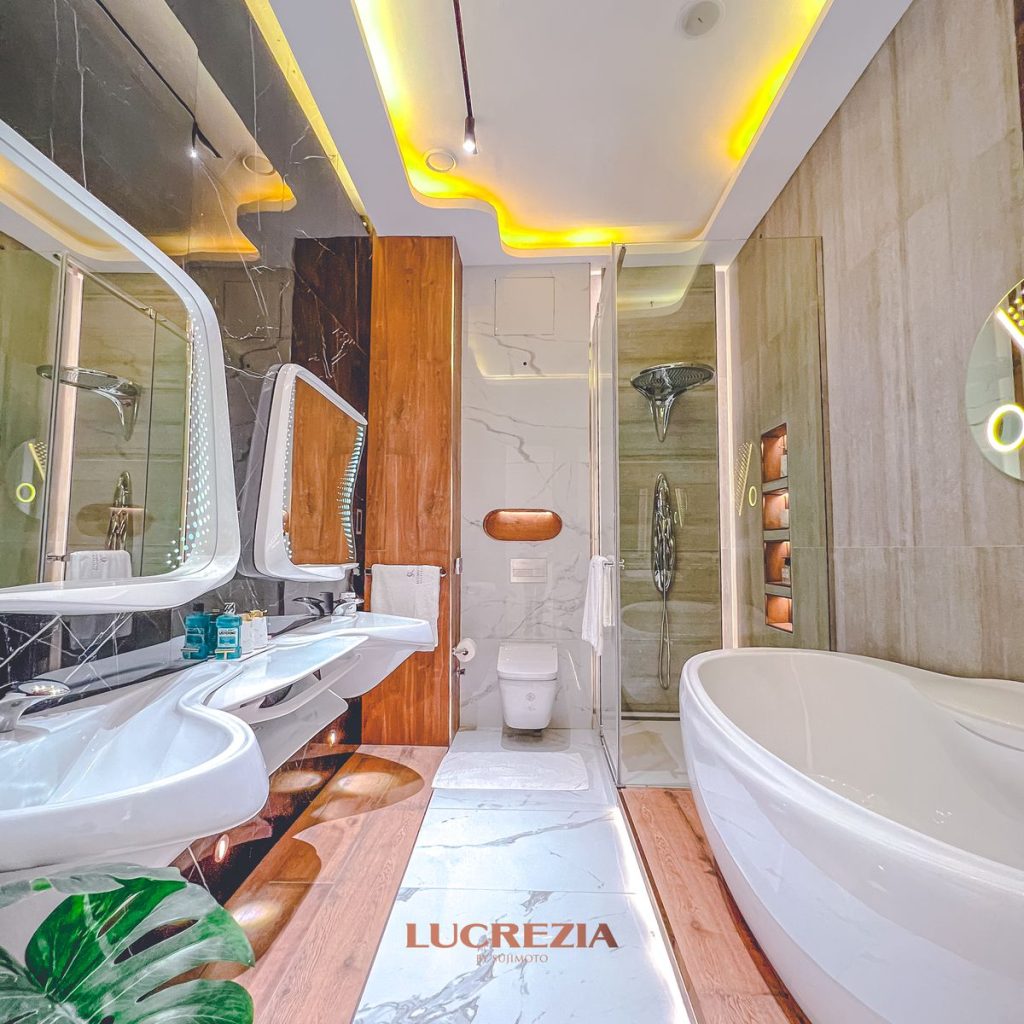
Within Lucrezia’s private realms, bathrooms are not afterthoughts — they are spatial sanctuaries. Each suite features pieces from the Zaha Hadid by Porcelanosa Vitae collection, a design language inspired by water’s flow and the essence of life itself. These sculptural fixtures — basins, faucets, sinks, bidets, mirrors, and bathtubs — are cast in the finest porcelain and shaped in continuous, organic forms that evoke movement and fluidity, embodying Hadid’s architectural DNA in every curve.
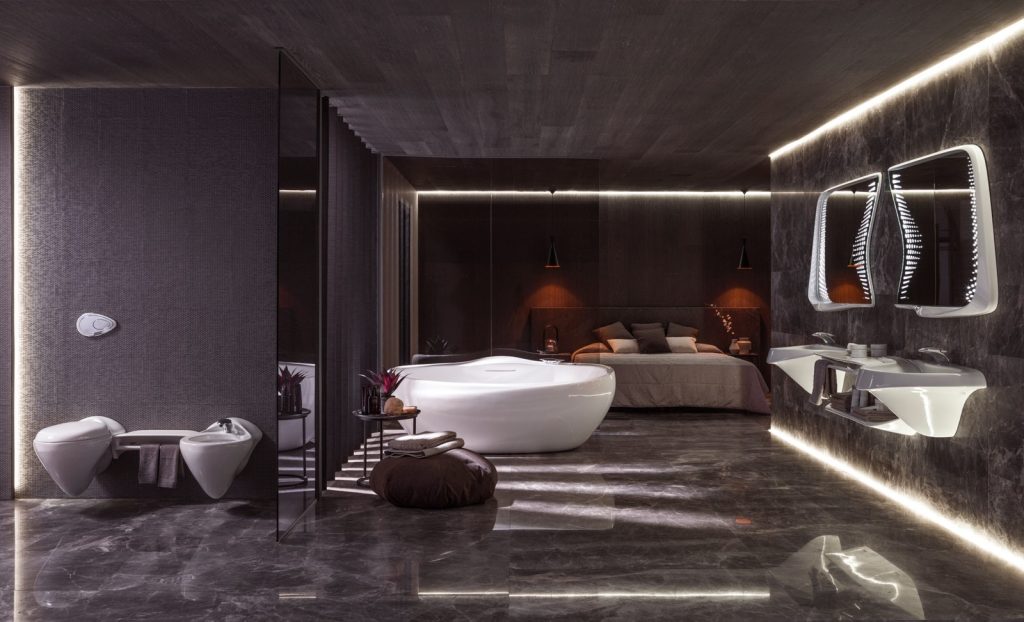
In Q1 2026, Lagos’ Banana Island is set to welcome the unveiling of Africa’s first residential development to feature a limited-edition Zaha Hadid bathroom, bringing Hadid’s visionary design to life in an exclusive, immersive experience for residents.
Banana Island adds unmatched prestige. Home to billionaires, top executives, and global visionaries, the enclave offers privacy, security, and cultural significance. Lucrezia doesn’t merely reside here — it defines the island, setting a new benchmark for African luxury, architectural excellence, and urban living.
The 4-bedroom maisonettes and penthouses are palatial, with high ceilings, floor-to-ceiling glazing, and sweeping views of the Lagos Lagoon. Private elevators, bespoke kitchens with premium fittings, marble flooring, and custom cabinetry create spaces that are simultaneously elegant sanctuaries and high-value investments. Every detail is curated to harmonize aesthetics with functionality, ensuring a living experience that is both opulent and practical.

Yet the true audacity of Lucrezia does not announce itself in public spaces. It reveals itself in the most private of rooms, where architecture is stripped of performance and reduced to its purest test: the relationship between the occupant and the space. In the bathroom, the Zaha Hadid philosophy becomes unmistakable. Curves replace corners, transitions are seamless, and every surface feels sculpted rather than assembled. Luxury here is not applied; it is inherent.
This approach sharply distinguishes Lucrezia from other high-end residential developments in Ikoyi and beyond. From premium towers on Banana Island to global benchmarks such as One Hyde Park in London or branded residences in Dubai. They are spatial experiences. Curves replace corners. Surfaces flow seamlessly into one another. Everyday rituals—water, light, reflection—are choreographed into something closer to sculpture than utility.
Architectural ambition, however, means little without execution. Lucrezia’s construction advanced from the first floor to the fifteenth floor in just five months, an unusually rapid pace for a development of its complexity and finish quality. This speed was not theatrical; it reflected disciplined planning, technical capacity, and institutional control. The Lucrezia project was delivered against one of the most turbulent economic backdrops in recent Nigerian history. Yet the backdrop could not have been more hostile. A dramatic naira depreciation froze real estate transactions for over two years, soaring material costs and Forex instability tested budgets, and investor impatience mounted as timelines stretched. Against every obstacle, Lucrezia advanced
LucreziaBySujimoto is not just a building—it is a manifesto. It proves that architecture can defy convention, marry audacity with precision, and transform risk into extraordinary reward. Every curve, every contour, every deliberate detail is a declaration: that vision, discipline, and courage can bend not only space, but expectation itself. On Banana Island, Lucrezia does more than inhabit the skyline—it redefines it, setting a benchmark where value, beauty, and innovation converge, and leaving a legacy that will shape the future of African luxury real estate for decades to come.
Dr. Sijibomi Ogundele is the Group Managing Director of Sujimoto Holdings, the Czar of Luxury Real Estate Development, and the mastermind developer behind the renowned Giuliano. Our other audacious projects, such as the most sophisticated building in Banana Island, LucreziaBySujimoto, the grandiose Sujimoto Twin Tower, the tallest twin towers in Africa; the regal Queen Amina by Sujimoto, a monument to royal affluence; the magnificent high-rise LeonardoBySujimoto; the Sujimoto Farm; an advanced farm estate system that incorporates housing, farm hospitals, hotels, and markets within an ecosystem, creating opportunities for agro-tourism and affordable housing., among other projects that have etched an indelible imprint on Nigeria’s skylines, a testament to Sujimoto’s unrivalled mastery of modern-day engineering.


